
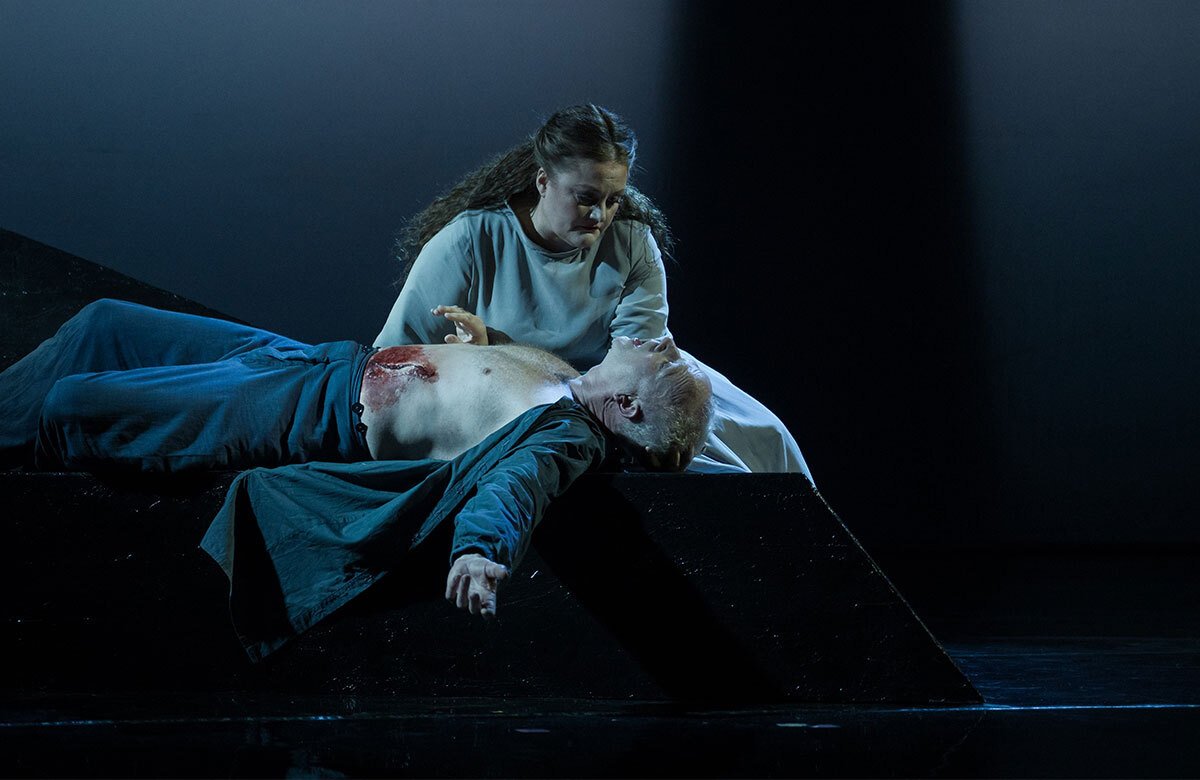
Tristan und Isolde Longborough Festival Opera 2026 ©Matthew Williams Ellis
There are evenings at Longborough that remind you why Britain's smallest major opera house has earned the devotion of Wagnerians across the globe. Then there are evenings like this final performance of Tristan und Isolde, where Richard Wagner's towering meditation on love, longing and death seemed not merely to be performed, but to unfold with an almost hypnotic inevitability.
Longborough has made Wagner part of its DNA, and this revival of Carmen Jakobi's production confirmed that the company continues to understand something fundamental about Tristan: spectacle is optional, emotional truth is not. In a theatre where the orchestra sits tantalisingly close and every facial expression registers, Wagner's vast score becomes surprisingly intimate. Rather than overwhelming the audience with theatrical gimmickry, Jakobi allows the music and relationships to breathe, trusting that Wagner's own psychological drama remains more than enough.
Kimie Nakano's elegant visual world continues to serve the drama well. The uncluttered stage, inspired by Japanese theatrical aesthetics, places complete emphasis on human interaction. It demands committed acting from the performers, and here the cast responded magnificently. Every movement carried meaning, every silence seemed charged with possibility.
The greatest luxury of the afternoon was Anthony Negus in the pit. Few conductors alive possess such instinctive understanding of Wagner's architecture, and fewer still are prepared to let the score unfold with such patience. Tempi breathed naturally; climaxes arrived because they had to, not because the conductor wanted applause. The Prelude shimmered with unbearable expectation, the Act II love duet expanded with glorious inevitability, while the desolation of Act III never lost its cumulative momentum. Throughout, the Longborough Festival Orchestra responded magnificently, producing playing of remarkable transparency and warmth. Wagner's orchestration can often become an impenetrable wall of sound; here every instrumental line had purpose, every harmonic shift heightened the drama.
Peter Wedd's Tristan was a performance of immense stamina rarely below mezzoforte. His tenor retains a welcome lyricism that prevented the role becoming merely heroic, while his long Act III monologue charted Tristan's physical collapse with moving honesty. Rather than portraying an indestructible Wagnerian titan, Wedd gave us a vulnerable man haunted by memory and desire. His diction remained exemplary throughout, making every phrase count.
Making her Longborough debut, Catherine Woodward proved a compelling if sometimes overwhelming Isolde. Possessing a substantial soprano capable of radiating volcanic fury, she charted the Irish princess's extraordinary emotional journey with impressive assurance. Her opening scenes crackled with righteous indignation before melting seamlessly into the ecstatic surrender of the Act II duet. Most impressive of all was her Act III Liebestod, still fresh after six hours, sustained with remarkable poise, allowing transcendence to emerge naturally rather than being manufactured through sheer decibel count.
Catherine Carby offered a beautifully judged Brangäne, her rich mezzo providing both warmth and authority, particularly in the off-stage warnings of Act II, exquisitely floated over Wagner's nocturnal orchestral textures. Robert Hayward was an outstanding Kurwenal, fiercely loyal yet deeply human, bringing emotional weight to the final act's heartbreaking exchanges.
King Marke is often reduced to an interruption in the lovers' ecstasy, but Alastair Miles refused such simplification. His great monologue emerged not as noble resignation but as genuine emotional devastation, sung with a sonorous bass that carried both dignity and profound hurt. Brian Smith Walters made the most of Melot's brief but pivotal appearances, while Peter Bronder’s Shepherd and Fraser Robinson’s Helmsman completed a consistently distinguished ensemble.
What Longborough repeatedly achieves with Wagner is something increasingly rare: performances that trust both composer and audience. There is no need for conceptual overstatement when the emotional and musical foundations are this secure. The production allows Wagner's revolutionary score to speak directly, and under Negus's incomparable guidance it speaks with extraordinary eloquence.
Six hours can feel an intimidating prospect. On this occasion, time simply dissolved. By the closing pages, as Isolde's final vision rose effortlessly above the orchestra's glowing textures, one realised that Longborough had once again accomplished something quietly remarkable. In a converted barn nestled among the Cotswold hills, Wagner's impossible dream of love beyond death felt utterly believable.
Longborough has long been Britain's Wagnerian jewel. On the evidence of this Tristan und Isolde, it still shines as brightly as ever.
David Buchler, Opera Spy